
Fisheries Canada turns to Grand River in species recovery effort
- May 19
- 3 min read
Casandra Turnbull
Managing Editor
Along the banks of the Grand River beneath the Cockshutt Bridge, a small fish no longer than a finger is drawing the attention of researchers, conservationists and environmental advocates alike.
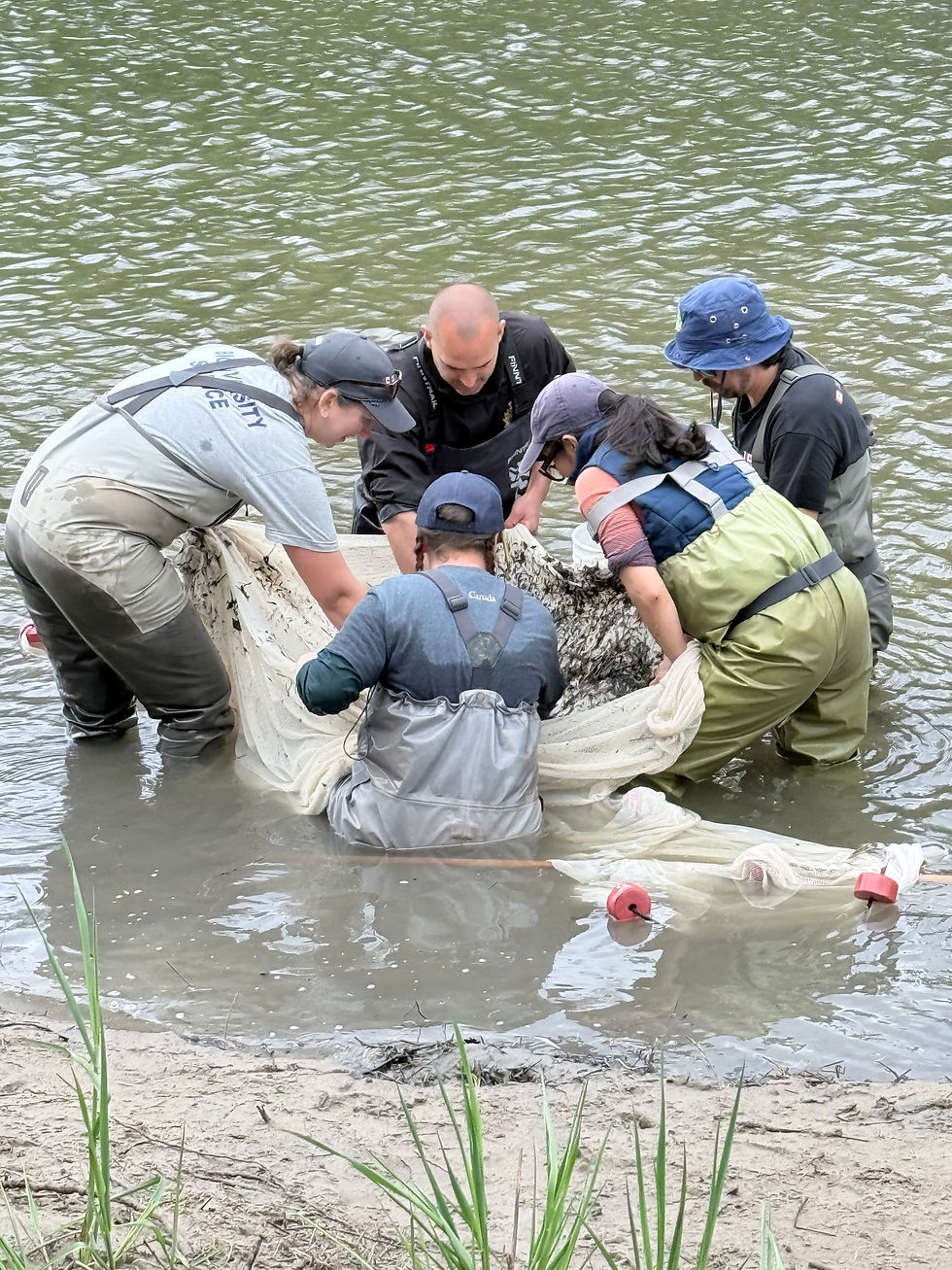
From May 4 to 14, researchers with Fisheries and Oceans Canada (DFO) returned to Brantford to collect data and continue a unique conservation initiative focused on the Eastern Sand Darter, a threatened species at risk that quietly inhabits portions of the Grand River.
The small member of the perch family survives in only nine rivers and lake areas across Ontario, making its presence in the Grand River especially significant. Unlike many fish species, the Eastern Sand Darter requires clean, expansive sandbars free of excess silt and contamination. Researchers say the stretch of river between Brantford and Cayuga offers exactly the type of habitat the fish needs to thrive.
"The Eastern Sand Darter population in the Grand River is believed to be one of the largest populations in Canada," said Andrew Drake, PhD research scientist with DFO's Great Lakes Laboratory for Fisheries and Aquatic Sciences. Estimates place the local adult population between 40,000 and 140,000 fish, with numbers remaining relatively stable over the past decade.
That healthy population has made the Grand River the source for an ambitious species recovery effort.
Over the past two years, DFO has been conducting an experimental reintroduction project involving the careful capture and relocation of adult Eastern Sand Darters from the Grand River to Big Otter Creek near Tillsonburg. The species once inhabited Big Otter Creek but disappeared from the watershed in the 1950s after habitat degradation made the area unsuitable.
Researchers believe conditions have improved enough to support the species once again.
The relocation effort is highly controlled. Fish undergo health assessments before being carefully packaged and transported while researchers monitor oxygen and water temperature throughout the journey. After arriving at their destination, the fish are gradually acclimated before being released, said Drake in response to Paris Independent questions emailed to the DFO last week.
He added, last year, DFO transferred 500 adult fish, and researchers were nearing that same target during this year's field work in Brantford.
"Some of the released fish remained in the sandbars where they were released, demonstrating good initial condition and survival," Drake said.
Researchers will continue monitoring those sites in hopes the transplanted fish reproduce and establish a self-sustaining population.
For local conservation organizations like the Brant Land Trust, the work underscores the importance of protecting not just a species, but the broader ecosystem that supports it.
"The Grand River is a feature which has to have the highest level of protection since it feeds our communities," said Lou Knechtel of Brant Land Trust. "When you speak with DFO, you can tell just how passionate they are about our area and the health of the Species at Risk fish that thrive here."
The Brant Land Trust works to protect and restore ecosystems and biodiversity across Brantford and Brant County within Canada's Carolinian region, an area known for supporting more rare and threatened species than anywhere else in the country.
Knechtel said the organization has increasingly focused on public education surrounding watershed health and aquatic environments through speaker series and partnerships with environmental experts.
For DFO scientists, protecting the Eastern Sand Darter goes beyond saving one species.
"Species like Eastern Sand Darter are an important part of Ontario's native biodiversity and provide numerous ecosystem benefits," Drake said. "Protecting Eastern Sand Darter habitat through effective watershed protections is the most effective way to ensure that this species remains in Canada for generations to come."


Comments