
Brothers in Arms: Frank and Albert Hitchman’s Story of Service and Sacrifice
Neil Edwards
Paris Independent Contributor
Frank and Albert Hitchman were born in Birmingham, England. They had an older brother, William, and a sister, Florence. Frank was born on May 30, 1891 and Albert followed later, on December 1, 1895. William and Frank were employed as spade and shovel handle makers in the edge tool manufacturing business before emigrating.
William and Frank immigrated to Paris together in 1912. Albert followed the next year in 1913 with their parents and sister. Always close to his older brother, Albert boarded with Frank at 24 Main Street in Paris, where they were living at the outbreak of the First World War.
Frank, a knitter at Penmans, and Albert enlisted together on September 14, 1915 with the 84th Battalion. They went together for training at the Niagara Camp, and both were certified in September, three days apart. They left Canada together on June 16, 1916, aboard the S.S. Empress of Britain and disembarked in England on the 29th. On July 3, they were transferred, still together, to 73rd Royal Highlanders Battalion, Canadian Infantry and on August 12, they proceeded for service overseas, arriving at la Havre next day and assigned to the same platoon. The battalion arrived at the Somme battlefield in mid-October 1916, after the main Battle of Courcelette had concluded.
Following the battle in September 1916, the 73rd Battalion experienced a grueling, high-casualty transition through the final, mud-soaked phases of the Somme campaign. By this point, heavy autumn rains had transformed the battlefield into a treacherous expanse of waist-deep, freezing mud. For their initial weeks, the battalion lived in a wet, open encampment. They were subjected to relentless German artillery barrages while work parties struggled to repair sodden, collapsing trenches and carry supplies to the front lines.
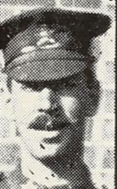
Frank and Albert bore it all together until November 11, 1916. They were still in the same platoon, they were operating the same machine gun, when Frank was killed by enemy fire at his brother’s side. Frank was 25 years old. Because of the condition of the battle-soaked landscape, Frank’s body was never recovered. He is remembered at the Vimy Memorial in Pas de Calais.
Later in November, as the battalion was preparing to pull out of the sector for the winter, Albert was partly buried by the explosion of a high explosive shell. He was rendered unconscious for two hours and was sent behind the front line for rest. After two weeks, he carried on with his unit until February, 1917 when he was diagnosed and evacuated with Pyrexia of Unknown Origin (P.U.O.), which refers to a high fever that the medical staff could not immediately determine the cause for. It was also called neurasthenia or trench fever. Today, we would call it PTSD, Post Traumatic Strees Disorder, and we would immediately know the cause of the disorder: the effects of a high explosive that buried him, almost dying himself, and the witnessing the death of his older brother right beside him, all experienced in these horrifying conditions at the front.
Then Albert contracted influenza. Between January 20 and February 28, 1917 Albert was sick with influenza and treated in France until February 28, when he was transferred to England. From that point he was transferred at least seven times until he was treated in Whitby Military Hospital for “nervous exhaustion”. He received his final discharge from the army.
But Albert survived. In the 1921 Canadian census, Albert, then 26, was single and living with the family of his brother, William Hitchman. On January 7, 1922, Albert Hitchman, then a millwright working Hamilton, married Alice Amelia Woodward, a machine operator from Hamilton. They went on to create a life together. Private Albert Hitchman died at Hamilton General Hospital on April 30, 1965.
Both brothers endured the same battles on the Somme front. Frank died there on November 11, 1916 and is commemorated at the Vimy Memorial. He have his photo, but not Albert’s. Albert suffered greatly, both on the battlefield and later at home, and endured his own hell which started at the same time as Frank’s and continued much longer. Yet there is no memorial for Albert.
That is why Homes of Heroes exists. We believe that every veteran deserves our honour and respect. We believe that every veteran has a story and we believe that we owe it to them to hear their stories and to acknowledge their service, whether or not they came home. To show our respect, in the three weeks before Remembrance Day, Homes of Heroes will be placing a sign in front of many of the homes where Paris veterans once lived. Last year we focused on Second World War veterans, and this year we will add focus on veterans from the First World War, soldiers like Frank and Albert Hitchman. Look for the signs. And please take the time to visit our website, www.homesofheroes.ca, and read our veterans’ stories. They have earned that their stories be heard.


Comments