
St. Marys Museum offering a glimpse into historical health care with Medical Maladies exhibit
- Aug 20, 2025
- 3 min read
By Galen Simmons, Local Journalism Initiative Reporter
For most of our history as a species, the ways in which we have treated our aches, pains, illnesses, infections and diseases was remarkably crude and, in many cases, lacking in scientific understanding.
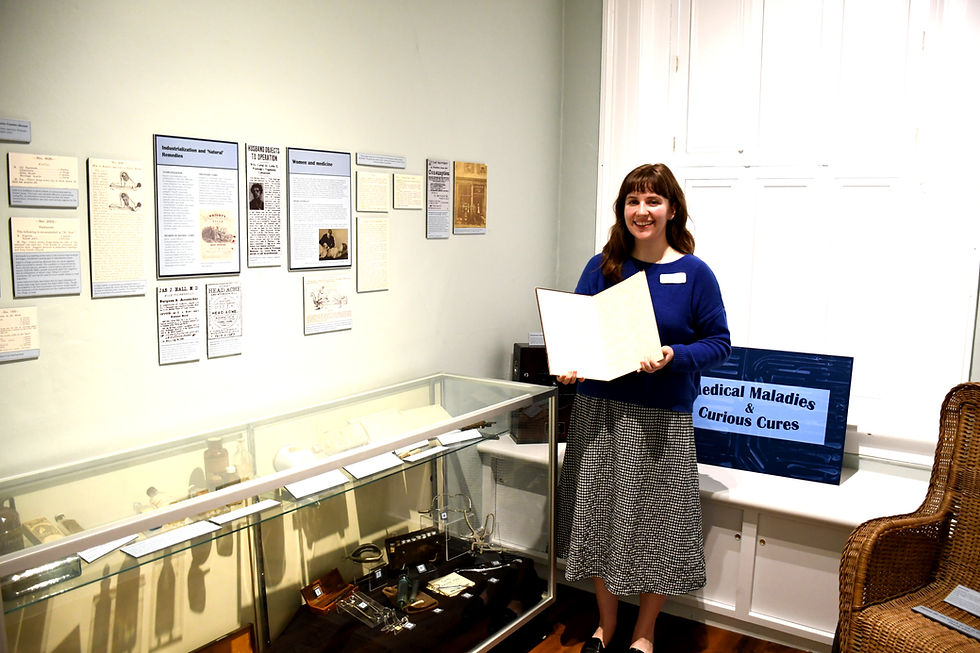
At the St. Marys Museum, Medical Maladies and Curious Cures, an exhibit running until January 2026 that was created by former museum intern Izzy Mitchell, explores that often gruesome history and the false cures and tonics that many of our ancestors and the town’s founders would have relied upon when they weren’t feeling their best.
“Our former intern Izzy Mitchell had an interest in early 18th and 19th century medicine, so this was part of her undergraduate degree, researching this, and we thought it would make a really great topic for an exhibit,” said museum curator assistant Emily Taylor, who took the Independent on a recent tour of the exhibit. “We’ve done medical exhibits in the past, especially anything related to the history of the hospital and doctors in the community, but we noticed that we had a lot of weird medical cures in our collection and a lot of information related to that, so that’s what this exhibit centres on.”
While there are plenty of tonic bottles and medical instruments on display, including a doctor’s bag from the 1930s and all of the tools and equipment a doctor would have kept in their bag to treat locals in their homes, one of Taylor’s favourite pieces on display is a book, Physical Charts Illustrating Pains Aches and Tender Spots written by Dr. Benjamin Franklin Weaver in 1907.
“It’s all about home remedies for different ailments, which is really funny,” Taylor said. “We have a couple posted on the wall, which are some of our favourites that we saw. I love the suppositories for painful menstruation; they include cannabis, belladonna and then cacao butter. A lot of these types of home remedies were because people didn’t have access to medical care at that time. We’ve had some huge jumps in the past 100 years in the medical care we receive, so a lot of people had to turn to home remedies to be able to help alleviate their symptoms because they were desperate for some kind of relief.
“I think they’re fascinating and I laugh at some of them, but I’m also kind of sad so many people had to turn towards them just to feel some sense of relief and some control. And I think something interesting in this exhibit that we do talk a lot about is how disadvantaged people – people of colour, women and disabled people – were left out of a lot of treatments and had to turn to these types of home remedies.”
While many of the people who relied on these home remedies had conditions that required much-greater medical intervention than what was recommended in Weaver’s book, Taylor said the treatment recipes made use of herbs and supplements that were far more readily available to the average St. Marys resident than more effective medical intervention, at least until the middle of the 20th century when the local hospital was established and our understanding of medicine began to advance rapidly.
Also on display in the exhibit are various “medical” tonic bottles and advertisements for “cure-alls” from the St. Marys Journal Argus newspaper.
“I think Lydia E. Pinkham’s Compound is one that we see a lot of advertisements for. It really just claimed to be a cure-all for anything if you were feeling dizzy or had a fever or had issues with circulation,” Taylor said, describing the alcohol-based tonic. “The difference for Lydia Pinkham’s was that it wasn’t harmful, at least, so the ingredients in it weren’t causing active harm. A lot of these things had ingredients in them like cocaine, opium or alcohol that would mask your symptoms and make you feel better. It’s kind of a smart way to sell something because then you’d get addicted and you’d have to keep buying more.”
According to Taylor, these “medicines” would be advertised by their purveyors in the local newspaper. These advertisements invited locals to meet these snake oil salesmen somewhere in town for a consultation before they moved on to the next town. Taylor says many of these cure-alls resulted in lawsuits in the years that followed their introductions to the retail market.
With plenty more medical history to explore through the items on display, the Medical Maladies and Curious Cures exhibit is a must-see at the St. Marys Museum, which is open from 9 a.m. to 4 p.m. Monday to Friday year-round, and from noon to 4 p.m. on Saturdays and Sundays in June, July and August.


Comments