
Diseases, crop insurance covered at tobacco board AGM
By Jeff Helsdon
Tobacco Mosaic Virus was the first virus identified more than a century ago, but it’s still around and causing problems today.
Dr. Mayphem AL-Amery, team lead at the Canadian Tobacco Research Foundation, presented those in attendance at the annual meeting of the Ontario Flue-Cured Tobacco Growers’ Marketing Board with a primer on the virus.
In the 1890s, tobacco mosaic virus was the first virus identified when Russian and Dutch researchers showed the symptoms of infected plants weren’t coming from a bacterium. TMV affects tobacco, peppers, potatoes, and ornamental plants. It is a single-strand RNA virus.
“Even weeds in your field can hold it,” AL-Amery said.
Worse still, TMV can survive 40 to 50 years in a field before reappearing on plants.
TMV is different than potato virus (PVY) and results in a mosaic, or mottled, pattern on the leaf. It is spread mechanically, and is not insect or airborne. This means it is spread on hands, tools, gloves, and machinery. It can survive on clothes, tires and greenhouse benches.
“Even the smallest contact can spread the virus,” AL-Amery explained.
The 2025 growing season saw 13 confirmed cases of TMV, all of which were in Norfolk except for one in Oxford. Most of the cases were concentrated in one area. TMV led to 1,300 acres being destroyed.
The last outbreak of TMV was in 2000. That outbreak was of a similar intensity, with about 18 cases. Crops were destroyed at the infected farms. Seeds sourced from North Carolina were blamed for the cases.
Last year’s outbreak was different, and it’s likely it was spread through clippings and float tray water. The challenging issue with TMV is plants can look fine in the greenhouse, but then the infection can show in the field. Secondary spread is then possible in the field.
AL-Amery said prevention is the best way to combat TMV. This means greenhouse sanitation and using TMV-resistant varieties. Field rotation and weed control are also good preventative measures. AL-Amery emphasized there is no cure once plants are infected.
CTRF has one TMV resistant variety registered and is working on two more. AL-Amery said anyone who had TMV should use only the resistant varieties.
AL-Amery also provided an update on the registration for new tobacco chemicals being worked on, and those that were going through re-evaluations.
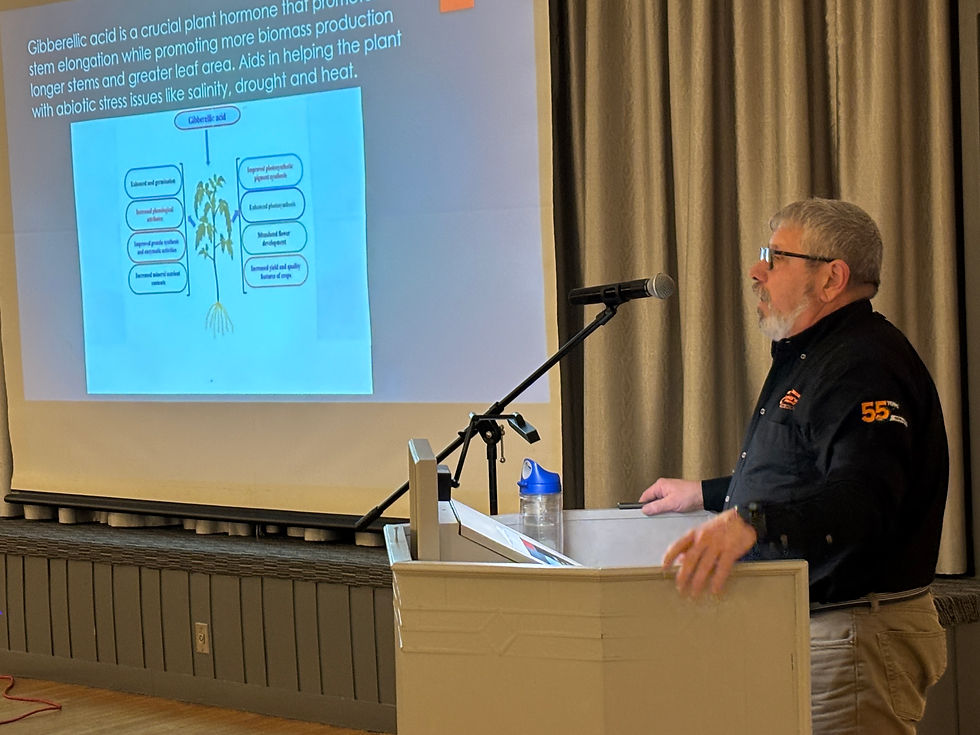
Other presentations at the AGM were an update from the Ministry of Finance about its online system, Eric Remler of Underhill Farm Supply about mitigating stress during tobacco production, and an overview of the services available through Agricorp.
Board chair’s report
Tobacco board chair Anthony De Carolis informed growers the 2025 season saw 140 licensed growers produce 17,977 contracted acres. This was a slight increase from 137 growers and 17,700 acres in 2024.
Crops yields were above average and quality was good, except for those who had TMV. Pricing was good for the better grades due to a shortage of tobacco globally.
The board has been working to improve its administrative processes. It has also been working with a legal team to advance the claims in the lawsuit against the cigarette manufacturers that was launched by the board in 2009 on behalf of growers that sold tobacco between 1991 and 1995.
De Carolis closed by giving a preview of the 2026 season, including the uncertainties from trade wars and changing American policy, tariffs and the review of the free trade agreement.
Agricorp
Jeff Smith of Agricorp told attendees that the Ontario government agency helps protect the livelihood of 47,000 Ontario farmers.
“As a company, we respond when individuals and government need us,” he said.
The company has underwritten $6 to $8 billion in risk annually. It has paid out $8 billion in claims out to farmers since it started in 1997.
Benefits of using Agricorp products include:
• Production loss – this covers both yield and quality loss
• Replanting – covers cost of replanting due to crop damage
• Salvaging – covers items like hail damage
• Price protection – Covers if prices are lower due to quality or low commodity prices.
In 2025, Agricorp insured 142 tobacco growers for 17,202 acres. There were claims for frost damage, resulting in replanting, and limited salvage claims for total claims of $8.28 million. A typical year’s payouts are about $4 million.


Comments