
New exhibit highlights history of decoy making
- Jul 1
- 3 min read

Jeff Helsdon
Grant Haven Media
A hand-carved duck decoy is part utility and part art, with a mix of history thrown in on some occasions.
The opening of the Davidson Decoy Gallery Collection offers an insight into the world of hand-carved decoys, and gives visitors a chance to see some of Ontario’s finest examples of decoy carving. Situated in the Backus Education Centre outside of Port Rowan, the gallery is located in an area steeped in waterfowling history. Carvers of the area are known by collectors across the continent.
The use of decoys to lure waterfowl into range for harvesting dates back to ancient Egypt. In North America, Indigenous peoples used decoys to bring ducks into bow-and-arrow range. Research has found reeds were a common base for Indigenous decoys. Decoy-making advanced in the 1800s, when market hunters carved wooden decoys, examples of which are highly prized by collectors today.
Wooden decoys continued to be used by the average hunter into the mid-20th century, when cheaper plastic displaced them from common use. Some of the Long Point hunt clubs still use wooden decoys to this day. As the use of rougher hunting blocks declined, decoy carving grew as an art form, with the detail of both carving and painting reaching new heights.
The Davidson Decoy Gallery is a modern, well-lit display of decoys not only from the Long Point area but also from other areas across the entire province. The local display includes examples of decoys from the Reeves family, who are renowned across North America. Divided into sections based on the carvers’ home areas, it tells the story of waterfowling through more than 100 decoys. It also includes several examples of modern artistic carvers, including world champions such as Pat Godin, Jeffrey Krete, and Paul Burdette.
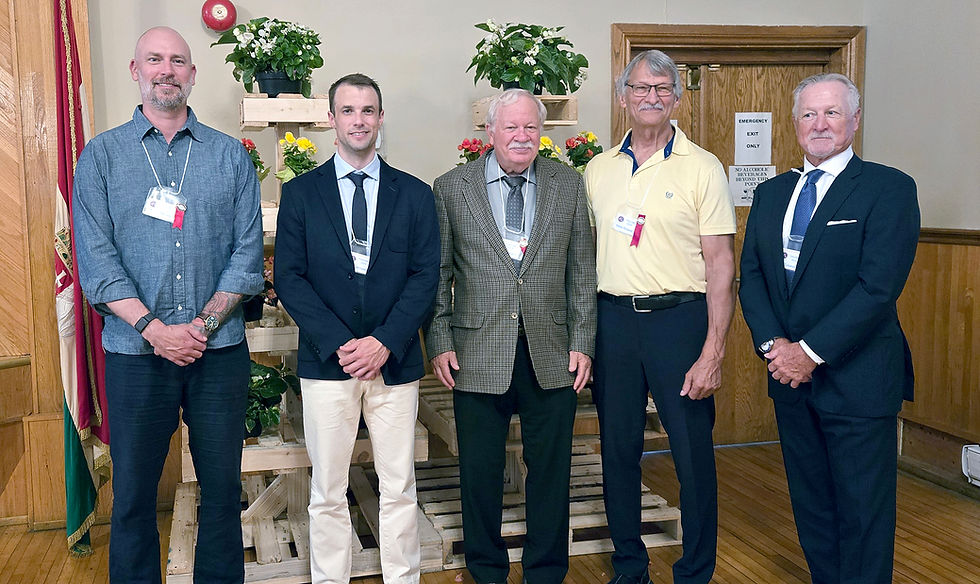
The tale of how the gallery came into being was revealed at an opening ceremony this spring. Backus curator Chloe Anna gave credit to Long Point Region Conservation Authority, which owns the Backus Conservation Area, general manager Judy Maxwell, and former curator Sarah Pointer, but said the real credit goes to Bruce Malcolm and Tom Davidson.
“Without their help, this wouldn’t be a thing,” she said. “They’re super passionate and know so much about waterfowling history.”
The journey to the display began with a phone call from Davidson, a hunter at the Lee Brown Marsh, to the marsh manager, Kim Brown.
“It started with a phone call to Kim, and I asked if there was anywhere we could buy or rent a building. He described this place,” Davidson said at the opening.
Brown was surprised at the call.
“I was in shock,” he said. “I’d seen his collection, and it was unbelievable.”
After Davidson drove to see the facility, the wheels were put in motion.
Davidson also met local Bruce Malcolm, who has been collecting decoys for 55 years. In addition to loaning their own decoys for the display, the two sourced decoys from elsewhere.
Malcolm was behind the Canadian Decoy and Outdoor Collectible Association, of which he is a member, bringing their annual show to Backus last fall. Some of the members donated decoys at that time, and the show is coming back on Sept. 19.
Davidson, who lives near Caledon, hunted the Long Point area for 45 years, at Lee Brown Marsh for 35 years, and was a member of the former Bluff’s Hunting Club on Long Point. He has a passion for the area, saying there is nowhere the hunting is better than at Long Point.
“Our objective was to pay tribute to the great carvers of the past and try to entice collectors of the future,” he said of the display.
The gallery is open until Sept. 6 from 11 a.m. to 4 p.m., Wednesday to Sunday. Extended hours are planned for the fall, from 11 a.m. to 4 p.m. on Fridays and Saturdays in September and October, to allow waterfowl hunters in the area to see the display.

Comments