
Historical events that made Goderich: The port, the harbour, and industrial resilience
- Jul 23
- 5 min read
By: Kathleen Smith
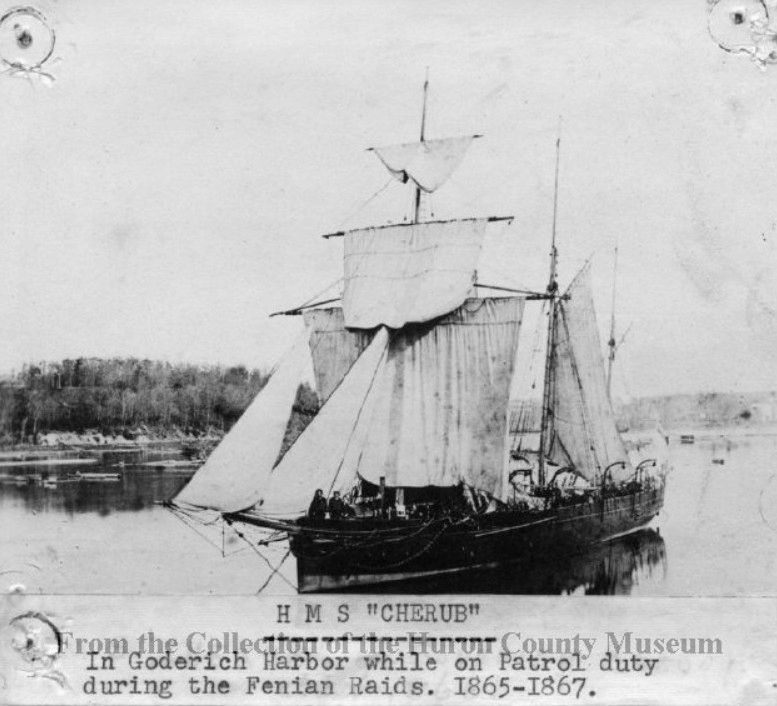
Goderich Harbour features the Port of Goderich, which is a significant shipping and fishing area.
The Port of Goderich, formed from the original mouth of the Maitland River, is situated on the traditional territories of the Anishinaabek Haudenosaunee, Wendat and Neutral peoples, whose stewardship dates back countless eras.
With beaches along the waterfront, offering picnic areas, playgrounds, and public washrooms, Goderich Harbour is home to the only deepwater port on the eastern shores of Lake Huron.
Servicing regional mining, agricultural inputs and outputs as well as manufacturing, the port is an important hub of commercial shipping.
According to the Goderich Port Management Corporation (GPMC), approximately 200 ships dock within the Port of Goderich annually, shipping commodities such as salt, grain and calcium chloride.
Archeological evidence shows that nomadic bands of hunters and gatherers were crossing the area as early as 11,000 years ago.
The area was used by the Attawandarons and later Chippewa First Nation, and these were the people the Europeans encountered when they arrived in what is now Goderich.
In 1822, Captain Wolsey Bayfield surveyed the entire lake. Five years later, Galt and Dunlop for the Canada Company arranged to buy the land for their settlement.
By 1828, a trading post was established at the mouth of the river.
By 1830 and 1850 the Canada Company built two wooden piers to protect vessels in the harbour from storms.
Over time, inhabitants moved up hill, but the use of the harbour area for industry and recreation continued.
Commercial development of the port began in the 1820s when the Canada Company constructed two wooden piers to protect the harbour from wind and waves off Lake Huron.
Goderich grew slowly as agricultural settlement of the surrounding region continued. The harbour served local needs at the time but did not yet have substantial commercial importance.
That transformation came in the 1850s and 1860s, as Great Lakes shipping expanded dramatically.
The development of railways from the harbour, combined with the harbour’s natural depth and protection, made Goderich a major terminal point for Great Lakes shipping.
By the 1880s, the harbour handled substantial volumes of grain, salt, and lumber.
Over the course of the 19th century, the port became a hive of activity supporting local lumber, grain, salt and general cargo trades, as well as a shipyard.
With its proximity to Lake Huron, Goderich took full advantage of its port access to the American markets.
In August 1868, the first full cargo of Goderich salt that ever left the port was shipped with 1,080 salt barrels.
Salt resources beneath Goderich became particularly significant, and not only shaped the town’s economy, but its harbour’s role as a salt shipping point.
By the 1870s Goderich Harbour was also home to a flour mill, run by Matthew Hutchinson. By the 1950s the business was sold and closed in 1960. The mill was destroyed by a fire in 1963, and the land it occupied is now a part of the Goderich Elevators Ltd.
The harbour’s natural beauty and industrial and commercial activities have inspired artists including Reuben R. Sallows, a photographer from Huron County, and Tom Pritchard, a painter, from Goderich.
By the early 20th century, the harbour was at its commercial peak.
It handled multiple major commodities simultaneously, and as a result, specific facilities had to be developed. This includes the grain elevators, salt loading, lumber storage, and general cargo storage facilities.
Multiple railway lines connected Goderich Harbour to inland markets and producers.
Shipping that happened at Goderich Harbour included some of the largest vessels operating on the Great Lakes. Steel-hulled bulk carriers exceeding 500 feet in length were regular visitors.
The harbour’s economic activity sustained the town’s economy that haven’t been replicated since.
Since the settlement of Goderich by the Canada Company, the natural systems of the harbour have been altered over the years.
Today, heritage signage helps visitors appreciate the waterfront’s remarkable past.
Despite challenges throughout the years, and most notably the severe storm damage from 2020-2022, the waterfront remains a beloved destination for beachgoers and history enthusiasts, celebrating the community’s resilience and proud maritime legacy.
Goderich’s shoreline evolved over time from a rugged industrial hub into a community destination.
Once known as ‘the boneyard’ for abandoned ships, today’s Rotary Cove and St. Christopher’s Beach offer scenic, kilometres-long walk through nearly 200 years of marine heritage.
Signs along the boardwalk highlight the Canada Company piers, where early settlers boarded schooners and began their inland journeys along the Huron Road.
Ships also found their final resting place in Goderich Harbour.
The Great Storm of 1913 struck Goderich directly. The town’s harbour became the main spot for response and recovery efforts.
During this storm, multiple vessels foundered within sight of Goderich. This includes the Hydras, the John A. McGean, and other vessels were lost in waters near the Goderich Harbour.
Residents could see distress signals and watch helplessly as vessels struggled in conditions that prevented rescue response.
In the days following, Goderich processed bodies that washed up along the eastern shore.
Local funeral homes, churches, and civic facilities were repurposed for the work. The mass burials in Maitland Cemetery commemorate mariners whose remains could not be found and returned to their families.
Tragically, many lost mariners had been residents of Goderich and surrounding communities, and the lost workforce represented years of accumulated maritime experience that took a generation to rebuild.
Shipping companies that lost vessels affected the harbour’s commercial volume.
The storm took place on November 9, 1913, and lasted three days.
This resulted in the loss of 244 lives on 19 vessels, and the stranding of a further 19 ships around the Great Lakes.
The community’s response to the storm became part of its identity, and memorial services began in 1914, continue today.
In 1999, the Town of Goderich bought the harbour from Her Majesty the Queen in the Right of Canada (Transport Canada). The harbour is now run by a not-for-profit agency, the Goderich Port Management Corporation (GPMC).
The Goderich Harbour was critical to the settlement of the Huron Tract, directed by the Canada Company.
This area was chosen by the Canada Company because of the natural harbour that would be vital to bringing in settlers and exporting natural resources.
The harbour has always housed industrial uses, including flour mills, oil storage facilities, and a salt mine. Fishing, lumber and ship building companies also operated out of the harbour.
These industries were supported by two railway lines, and large shipping fleets.
Today, Goderich Harbour is dominated by two major industries still in operation: Goderich Elevators Ltd. (P&H) and Compass Minerals Sifto Salt Mine.
These industries are inextricably linked to shipping to transport their goods.
Due to the strength of these industries, the Goderich Harbour still provides one of the largest employment bases in the community.
This is an ongoing series of historical features to tell the story of Goderich, in each issue of the Goderich Sun, from June 2026 until June 2027, in anticipation of its bicentennial.


Comments